

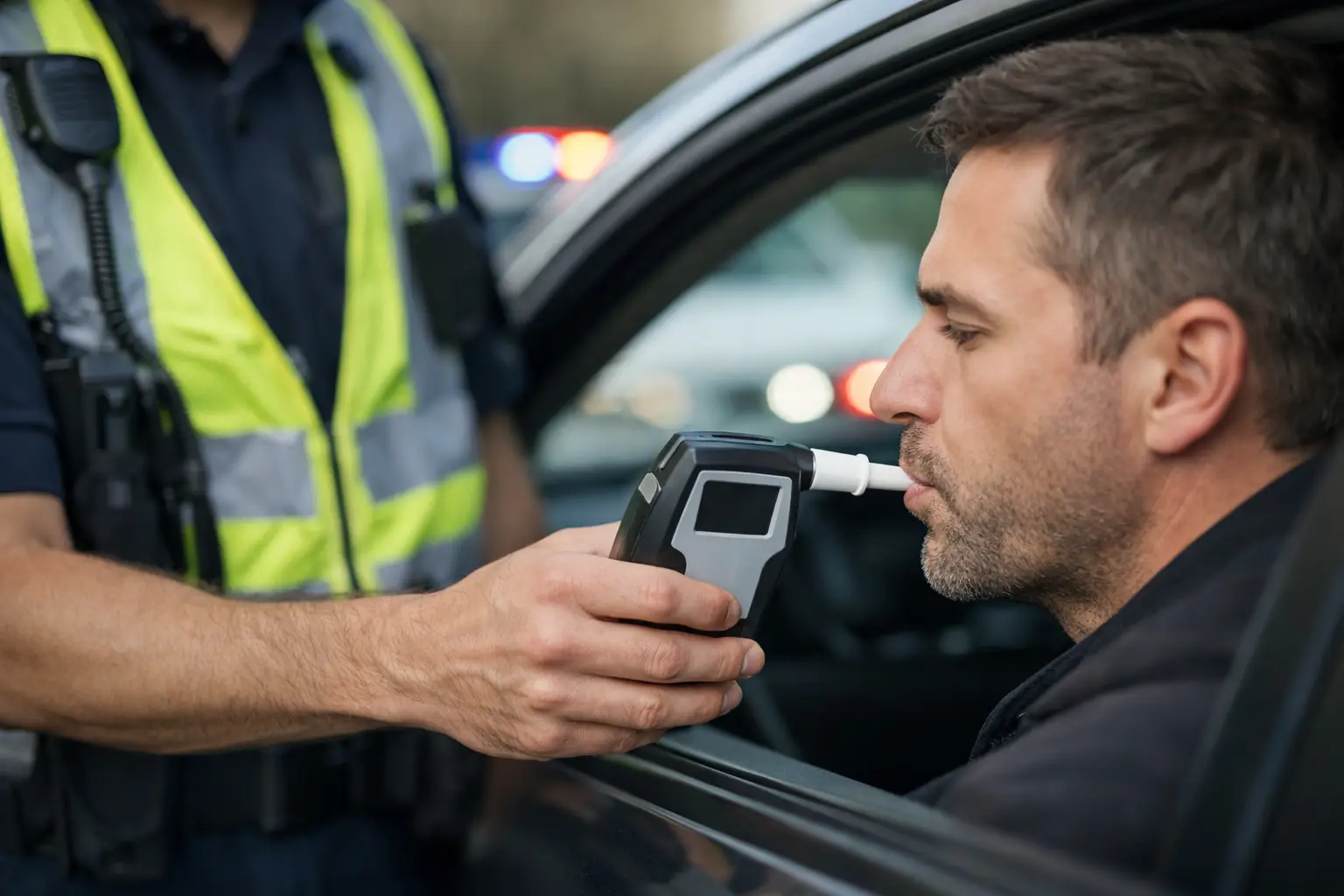
A roadside stop can go from routine to serious in seconds. If police say you refused to provide a breath sample, the refuse breath test penalty NSW drivers face can involve a criminal offence, a court date, a fine and a lengthy licence disqualification. For many people, the real shock is not just the charge itself – it is how quickly it can affect work, family commitments and your ability to drive at all.
This is not an area where guesswork helps. Refusing a breath test in NSW is treated seriously, and the outcome often turns on the exact words used, what police requested, whether you were capable of complying, and what happened at the roadside or police station.
What happens if you refuse a breath test in NSW?
In NSW, police have broad powers to require drivers and certain other road users to submit to breath testing. If a person refuses or fails to provide a sample as required, they can be charged with an offence. That offence is often dealt with in the Local Court, and it can carry penalties similar in seriousness to high-range drink driving matters.
People often assume refusal only means saying a direct “no”. It is not that simple. In practice, police may allege refusal where a person does not cooperate, pretends to comply without providing an adequate sample, repeatedly fails to blow properly, or otherwise does not submit to the test as directed. Whether that amounts to a legal refusal depends on the facts.
That is where early legal advice matters. A refusal case is not always as straightforward as the police fact sheet makes it look.
Why the refuse breath test penalty NSW courts impose can be severe
The law treats refusal seriously because it undermines alcohol detection. From the court’s perspective, refusing a lawful test can prevent police from measuring the driver’s blood alcohol level at all. That is one reason penalties can be tough.
A conviction may result in a significant fine and a period of licence disqualification. In some cases, the court can also impose an interlock order depending on the charge and the way the matter proceeds. Just as important, a criminal conviction can affect employment, professional licences, travel and insurance.
The exact penalty depends on the type of offence, whether it is a first offence or a second or subsequent offence, and whether the prosecution alleges refusal of a roadside screening test, refusal of a breath analysis, or related conduct after arrest. The circumstances matter. So does your traffic record.
Roadside breath test versus breath analysis
Many drivers do not realise there is a legal difference between the initial roadside breath test and the more formal breath analysis usually conducted at a police station or in a breath analysis vehicle.
The roadside test is a preliminary screening process. If police suspect alcohol involvement, they may then require a breath analysis. Refusing the analysis stage is generally treated even more seriously because it follows a formal police requirement after the screening stage.
That distinction can matter when assessing the charge, the available evidence and the likely penalty. It can also matter when considering whether police followed the proper process before laying the charge.
What police usually need to prove
For a refusal charge to be made out, the prosecution generally needs to prove the requirement was lawful, that it was properly made, and that you refused or failed to submit as required.
That may sound simple, but the detail is often where a defence emerges. For example, was the person actually driving or occupying the driver’s seat? Was the police direction clear? Did the person understand what was required? Were there language, medical or physical issues affecting their ability to provide a sample? Did police record the interaction accurately?
In some matters, body-worn footage, police notebook entries and custody records become critical. A case can look very different once the objective material is reviewed.
Refusal is not always deliberate
One of the most common misunderstandings is that any unsuccessful attempt to blow into the device is automatically a refusal. That is not always correct.
Some people have genuine medical issues, respiratory problems, panic, intoxication-related confusion, injuries, dentures, or limited English. Others are so distressed by the stop or arrest that they do not properly understand what police are asking them to do. There are also cases where a person tries to provide a sample but cannot do so effectively.
That does not mean the charge will disappear on its own. It means the surrounding facts need careful examination. The court will look at whether the failure was a true refusal or whether there was a reasonable explanation.
What penalties can the court impose?
The refuse breath test penalty NSW drivers face varies by offence, but the key consequences usually include a criminal conviction unless the court deals with the matter more leniently, a fine, and a period of disqualification from driving. For some offenders, the practical impact of losing a licence is the harshest part of the sentence.
There is no single standard outcome. A first-time offender with a previously clean traffic history and strong subjective material is in a very different position from someone with prior drink driving, suspension or major traffic matters. The court may also look closely at why the person refused, whether there was any actual risk on the road, and what steps they have taken since the offence.
This is one of those matters where “it depends” is not a cop-out. It is the reality of sentencing in NSW.
Can you defend a refusal charge?
Yes, in some cases. A proper defence depends on the evidence, not hope.
One pathway is to challenge whether the police requirement was validly made. Another is to dispute that there was a refusal at all. A third is to show that the accused person was physically incapable of complying, or that there is a reasonable doubt about what occurred.
There are also matters where the focus is not on defending the charge at hearing, but on preparing the strongest possible sentence case. If the evidence is strong, the strategy may shift to reducing the damage – minimising the penalty, addressing disqualification issues and presenting persuasive material to the court.
That can include character references, proof of employment needs, evidence of rehabilitation, medical material where relevant, and a carefully prepared explanation that accepts responsibility without making the situation worse.
What should you do if you have been charged?
The first step is to stop talking about the case casually, including by text or on social media. Comments made in frustration can come back to hurt you.
The next step is to get legal advice early, ideally before the first court date. Refusal matters often reward early strategy. A lawyer can identify whether the brief should be challenged, whether police procedures need close scrutiny, and what material should be gathered for sentence.
You should also check your licence status immediately. Some drivers are surprised to learn there are already restrictions, suspensions or administrative consequences in play before the matter is finalised.
If your ability to work depends on driving, do not assume the court will simply make an exception. NSW traffic law is technical, and judicial discretion has limits. The right approach is to prepare properly, not rely on sympathy alone.
Why local court preparation matters
These cases are often decided in the Local Court, but that should not be mistaken for low stakes. A traffic matter can affect your licence, your income, your record and, in some cases, your future employment.
Preparation matters because magistrates see refusal cases regularly. They know the common excuses. If there is a real issue with the prosecution case, it needs to be identified clearly and backed by evidence. If the matter is one of damage control, the material placed before the court needs to be organised, credible and directed to the real sentencing issues.
That is particularly important for drivers in Sydney and across NSW who rely on their licence for work, school drop-offs, caring responsibilities or day-to-day mobility. The consequences are not abstract. They are immediate.
A strong response can change the outcome
A refusal charge does not automatically mean the worst-case result, but it does need to be taken seriously from day one. The right approach depends on the allegation, the police evidence, your traffic history and whether there is a real defence or a stronger sentencing pathway.
When your licence and record are on the line, the smartest move is to get clear advice early, understand exactly what police allege, and build a response that fits the facts rather than the panic of the moment.