

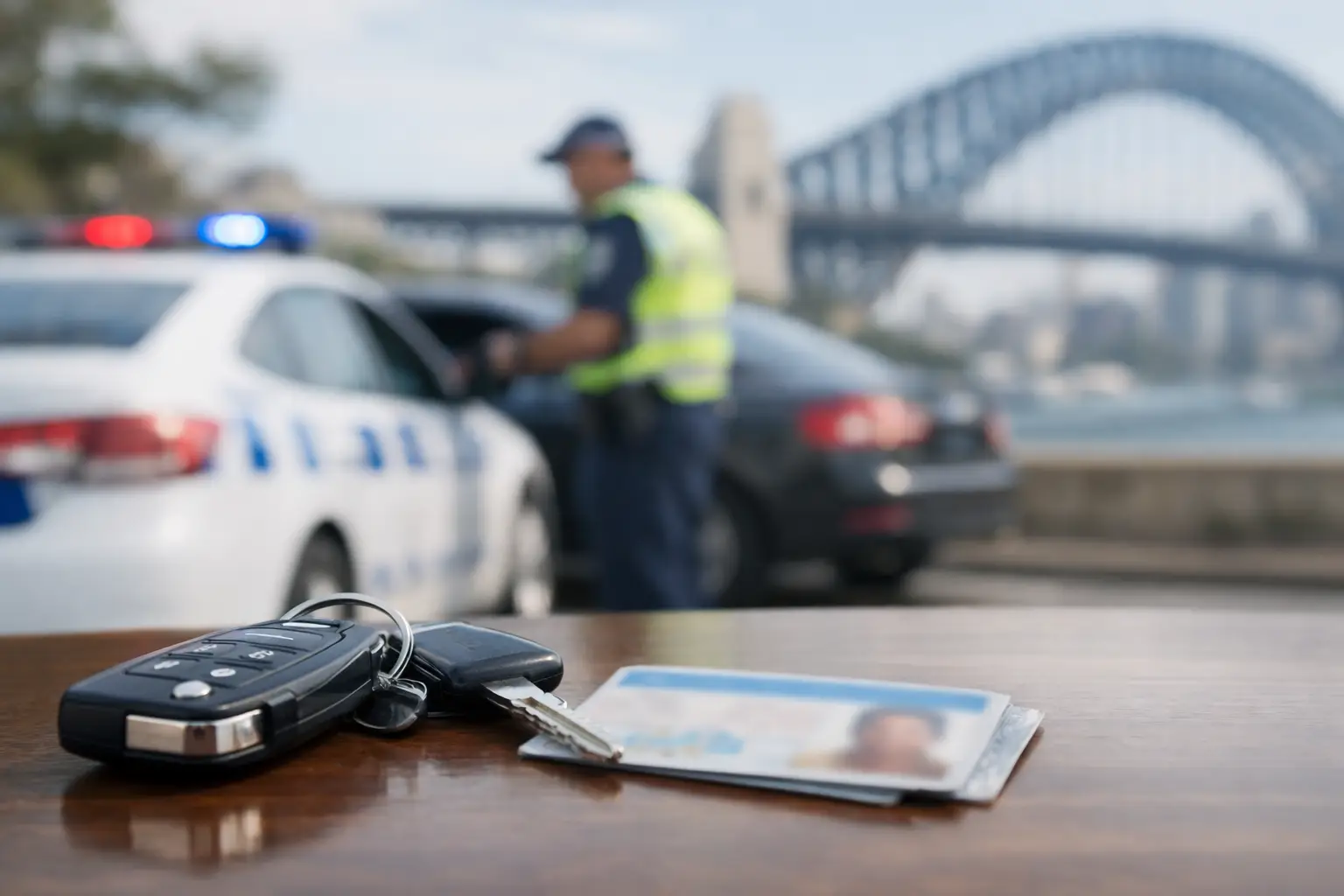
A set of flashing lights, a roadside test and a police officer taking your licence can make one question feel far more urgent than the charge itself: will I lose my licence immediately? In NSW, the answer can be yes. For particular traffic offences, police can issue an immediate suspension notice before your case has reached court.
That does not mean the outcome is beyond challenge, or that every allegation leads to the same result. But it does mean timing matters. If your licence is essential for work, caring responsibilities or simply getting your life moving, you need to understand exactly what notice you have received and what action is available.
When can police suspend your licence immediately?
NSW police have powers to suspend a driver licence on the spot for a range of serious traffic matters. The circumstances depend on the allegation, the evidence available at the roadside and your licence class.
Immediate suspension is commonly associated with mid-range and high-range drink driving, refusing or failing to provide a breath analysis, driving under the influence, and certain drug-driving allegations. It may also arise for serious speeding, street racing, dangerous driving, driving while disqualified, or offences involving a fatality or grievous bodily harm.
The exact process differs between offences. A positive roadside test, for example, is not always the final evidentiary result. Drink and drug-driving matters can involve further tests and procedures. Yet police may still have authority to take immediate action against your licence while the prosecution progresses.
For many drivers, this is the first shock: an immediate suspension is an administrative action. It can start before a magistrate has heard your explanation, considered your personal circumstances or decided whether you are guilty.
An immediate suspension is not the same as a court disqualification
These terms are often confused, but the distinction matters.
An immediate suspension is usually imposed by police or Transport for NSW under statutory powers. It prevents you from driving for the stated period unless the suspension is successfully overturned, varied or otherwise dealt with through the proper process.
A court disqualification is a penalty imposed by a magistrate after a guilty plea, finding of guilt or, in some cases, a conviction. The court may disqualify you for a longer period, impose an interlock requirement, fine you, or deal with the offence in another way permitted by law.
You can therefore face two separate practical problems: the immediate loss of your driving privileges now, and the eventual court outcome later. One does not automatically determine the other.
Will I lose my licence immediately after drink driving?
It depends on the prescribed concentration of alcohol allegation and the way police deal with it.
For lower-range drink driving, police may issue an infringement notice in suitable cases. That can carry a licence suspension and fine without a court appearance unless you elect to have the matter determined by a court. Other drivers may be charged and required to attend the Local Court.
For mid-range or high-range drink driving, an immediate police suspension is a real possibility. The same is true where police allege that you refused or failed to provide a breath analysis, or that you drove under the influence. Learner and provisional licence holders also face stricter rules because they are required to maintain a zero blood alcohol concentration.
Do not assume a short trip, an otherwise clean record or the fact that you felt capable of driving will prevent suspension. Those factors may become relevant to a court outcome or an appeal, but they do not necessarily stop police from issuing a notice at the roadside.
If you are handed a suspension notice, read it carefully. It should identify the alleged offence, the date the suspension takes effect, the duration and information about your review or appeal rights. Those details dictate what must happen next.
What about drug driving and roadside testing?
Drug-driving cases can be particularly stressful because people often believe a roadside oral fluid test is the final word. It is not. A roadside test is part of a legal process that may include further analysis and evidence.
However, that does not mean you should continue driving or disregard a notice given by police. Allegations involving driving with the presence of an illicit drug, driving under the influence of a drug, or refusing to provide a sample can have serious licence consequences. The available penalties and police powers depend on the particular charge, prior history and evidence.
Prescription medication can create further complexity. If medication has affected your capacity to drive, the issue may be different from a standard roadside drug-presence allegation. Tell your lawyer what you took, when you took it, whether it was prescribed and what directions you were given. Do not try to explain the legal position away at the roadside.
What you should do when your licence is suspended
The first rule is simple: do not drive once a suspension takes effect. Driving while suspended can expose you to a further charge and put your future licence position in a far worse state. There is no safe exception for getting to work, collecting children or travelling a short distance home.
Keep every document given to you, including the suspension notice, court attendance notice, infringement notice, bail paperwork and any test receipt. Write down what occurred while the details are fresh: where you were stopped, what was said, the timing of tests, and whether there were witnesses or relevant CCTV nearby.
You should also check the deadline for challenging the suspension. Licence appeal deadlines are strict. In many NSW police-suspension matters, an appeal must be filed in the Local Court within 28 days of the notice being served. The right pathway and timeframe can differ depending on the type of suspension, so do not rely on advice from a friend whose case was different.
A licence appeal is not automatic relief
An appeal gives you an opportunity to ask the Local Court to consider the suspension. Depending on the law applying to your matter, the court may confirm the suspension, vary it or set it aside. The court will not simply restore a licence because losing it is inconvenient.
Strong preparation is critical. The relevant issues can include the allegations, your traffic record, the impact on others, your work and family circumstances, the seriousness of the risk alleged, and the evidence supporting the suspension. In some cases, the court’s powers are limited. In others, a carefully presented appeal can make a meaningful difference.
Employment hardship can help explain the real consequences, but it is rarely enough on its own. A court needs reliable material, not broad assertions. A letter from an employer should address your role, why driving is genuinely necessary, whether alternative duties exist and the likely consequence if you cannot drive. If you have caring responsibilities, provide clear evidence of the practical impact and available alternatives.
Can I drive on a work licence in NSW?
NSW does not generally offer a work licence system that lets a suspended driver keep driving solely for employment. This catches many people by surprise, especially those who have heard of restricted licences in other states.
That is why acting early matters. If an appeal is available, it must be assessed promptly and prepared properly. If a court matter is pending, your broader strategy also matters: whether you have a defence, whether the prosecution evidence should be tested, whether you should plead guilty, and what material should be put before the magistrate to seek the best available outcome.
Do not make decisions based only on the immediate inconvenience. A rushed guilty plea, an unsupported appeal or driving despite a suspension can have consequences well beyond the next few months.
How a traffic lawyer can protect your position
The best response depends on the notice, the charge and the evidence. A traffic lawyer can identify whether police used the correct power, calculate the deadline, advise whether an appeal is realistic and prepare the material needed for court. Where the charge itself is contested, the focus may need to be on testing the prosecution case rather than only seeking leniency.
At KRAYEM & CO Lawyers, the approach is direct: assess the immediate risk, take control of the court process and build the strongest lawful case for protecting your licence and future. That may mean challenging a suspension, defending the allegation, or presenting persuasive material to reduce the damage where a plea is the right course.
Your licence may be at risk from the moment a notice is issued, but you do not have to guess what comes next. Get the notice reviewed quickly, obey its terms, and obtain clear advice before a missed deadline or one unnecessary drive makes a difficult matter harder.