

A drink driving matter does not end when you leave court. For many NSW drivers, the next consequence is an alcohol interlock order – a condition that can affect how you get to work, care for family and keep daily life moving. This interlock licence guide NSW explains what happens after an order is made, what you must do before driving again, and where legal advice can make a real difference.
What is an interlock licence in NSW?
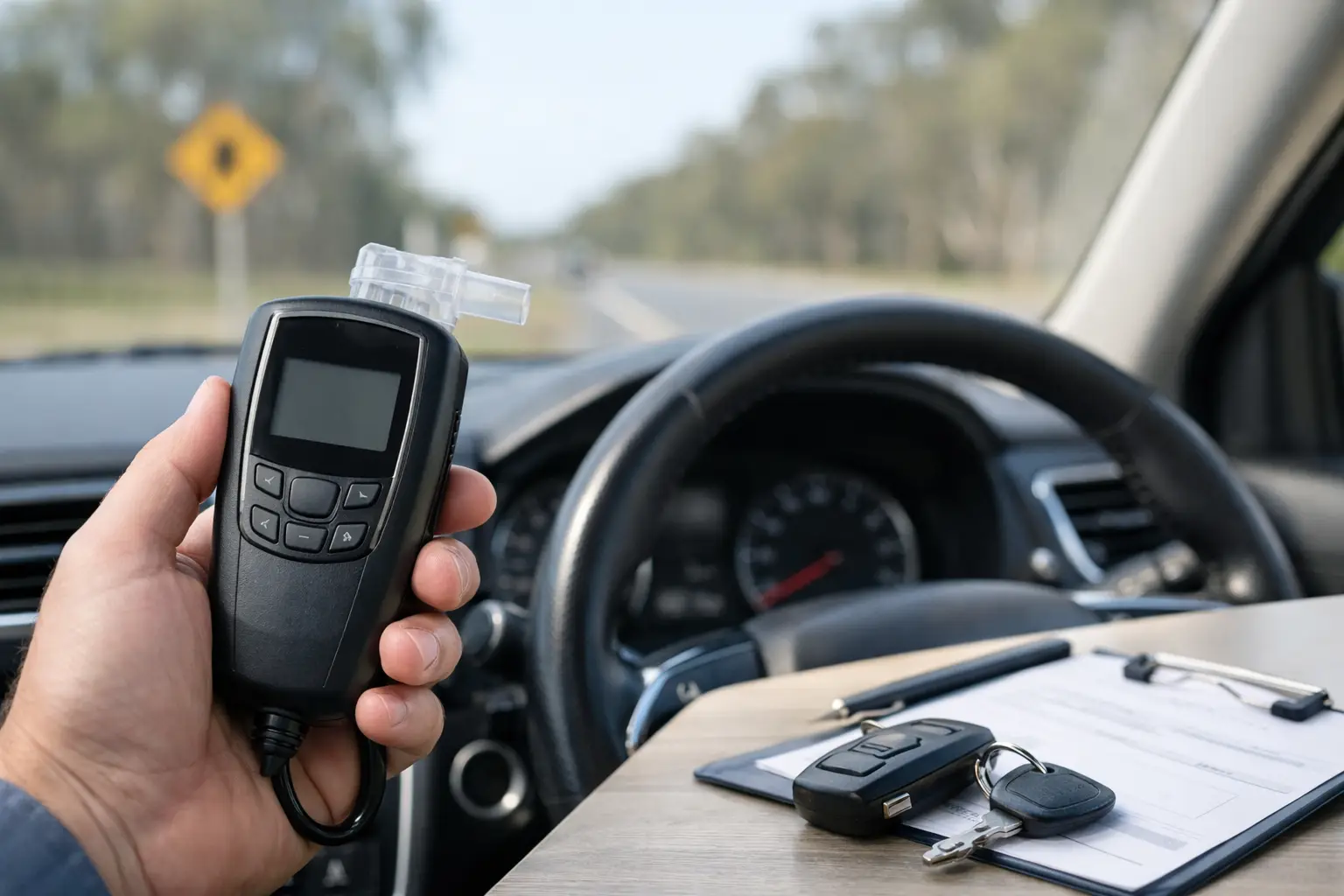
An alcohol interlock is an electronic breath-testing device fitted to a vehicle. Before the engine can start, the driver must provide a breath sample. The device may also require rolling retests while the vehicle is being driven. It records breath test results, attempted starts and other information for review through the program.
An interlock licence is a restricted NSW driver licence issued to someone serving an interlock order. It is not a normal return to unrestricted driving. You can only drive in accordance with your licence conditions and in a vehicle fitted with an approved interlock device.
In many prescribed drink driving and serious traffic matters, the court imposes a period of disqualification followed by an interlock period. The length of each period depends on the charge, whether it is a first or subsequent offence, the reading alleged, and the sentencing outcome. Common interlock periods can be 12, 24 or 48 months, but the detail matters. Do not rely on what happened to a friend or what you have read online about an older case.
From court order to getting back on the road
The first part of an interlock order is usually a period when you are disqualified from driving. During that time, you cannot lawfully drive at all. Driving while disqualified is a separate and serious offence that can place your licence, employment and liberty at greater risk.
Once the disqualification period ends, you do not simply start driving again. You need to enter the NSW interlock program, arrange installation with an approved provider and apply for the appropriate interlock licence. You must also meet any other licensing requirements that apply to you, including resolving outstanding fines or suspensions where relevant.
The practical sequence generally looks like this:
- Serve the court-ordered disqualification period without driving.
- Enrol in the interlock program and arrange device installation in the vehicle or vehicles you are permitted to drive.
- Obtain an interlock licence before getting behind the wheel.
- Attend scheduled servicing, calibration and data-download appointments throughout the order.
- Complete the required exit steps before applying to return to an unrestricted licence.
Starting the process early can prevent an avoidable gap between the end of your disqualification and the date you can lawfully drive. However, early preparation does not give you permission to drive before your disqualification expires.
Which vehicle can you drive?
This issue catches people out. An interlock licence is tied to strict conditions. You should assume you cannot drive a vehicle that does not have an approved device installed unless you have received clear confirmation that an exception applies in your circumstances.
That includes a partner’s car, a family member’s ute and, in some cases, a work vehicle. If driving is central to your job, raise that issue with your lawyer before court and obtain specific advice about how the licence conditions will operate. A verbal assurance from an employer is not a legal exemption.
Interlock licence rules you cannot afford to ignore
The program is designed to monitor compliance, not merely to stop one failed start. Your licence will generally carry a zero alcohol condition. The interlock itself is calibrated to prevent operation when alcohol is detected above its programmed threshold, which may be different from the general legal blood alcohol limit that applies to other drivers.
Alcohol is not the only concern. Some mouthwashes, medicines, food products and residual alcohol from the previous night can affect a breath sample. The safest approach is straightforward: do not consume alcohol before driving, allow adequate time after using any product containing alcohol, and follow the instructions given by the provider.
Do not ask another person to provide a sample for you. Trying to bypass the device, tampering with it, missing service appointments or driving a non-interlock vehicle can be recorded and can lead to further consequences. It may delay completion of the program, affect your ability to obtain an unrestricted licence, or expose you to fresh traffic charges.
Keep every appointment and treat every required breath test seriously. If there is a genuine issue with the device or a test result, document what occurred and seek advice promptly rather than ignoring correspondence or hoping it will disappear.
What does the NSW interlock program cost?
The financial burden is real. Participants are generally responsible for installation, regular leasing and servicing fees, device removal and any required medical consultations or assessments. Costs vary with the provider, vehicle and duration of the order.
For someone already facing a fine, court costs and time off work, this can be difficult. NSW financial assistance may be available to eligible participants experiencing hardship. Eligibility is not automatic, and it is worth checking the requirements early rather than falling behind on appointments.
Cost alone is rarely a reason to ignore the order. If you cannot meet a requirement, get advice about your options immediately. A missed step may ultimately cost far more than dealing with the problem early.
Can you avoid an interlock order?
In limited cases, a court may make an interlock exemption order where participation would cause severe hardship and the legal test is met. This is not a simple convenience application. Difficulty getting to work, the inconvenience of relying on others, or a preference not to install a device will not necessarily be enough.
There is also a serious trade-off. An exemption can result in a longer period of complete disqualification instead of an interlock period. For some people, that is a worse outcome. The right approach depends on your work, family responsibilities, location, access to transport, traffic history and the evidence available to support your position.
A well-prepared court case looks beyond the interlock issue. It may involve examining the police evidence, the accuracy and lawfulness of the procedure, your plea, prior traffic record, need for a licence, rehabilitation and the objective material placed before the magistrate. No lawyer can promise a particular result, but preparation can materially change the way your circumstances are presented.
Mistakes that can make a difficult matter worse
The most damaging mistake is driving while disqualified because you need to get to work or believe the licence process has already started. It has not. Until you hold a valid interlock licence and meet its conditions, you should not drive.
Another common error is treating the program as administrative rather than legal. The court order, licence conditions, provider requirements and Transport for NSW processes all need to align. One missed requirement can create a chain of delays and stress.
Finally, do not wait until the final weeks of your disqualification to understand the pathway ahead. Check the exact orders made by the court, obtain advice if anything is unclear, and organise the practical steps before you are eligible to return to driving.
If your licence, job or family responsibilities are on the line, clear advice early gives you more control. KRAYEM & CO Lawyers can assess the charge, the court options and the practical consequences of an interlock order before a manageable traffic matter becomes a much larger problem.