

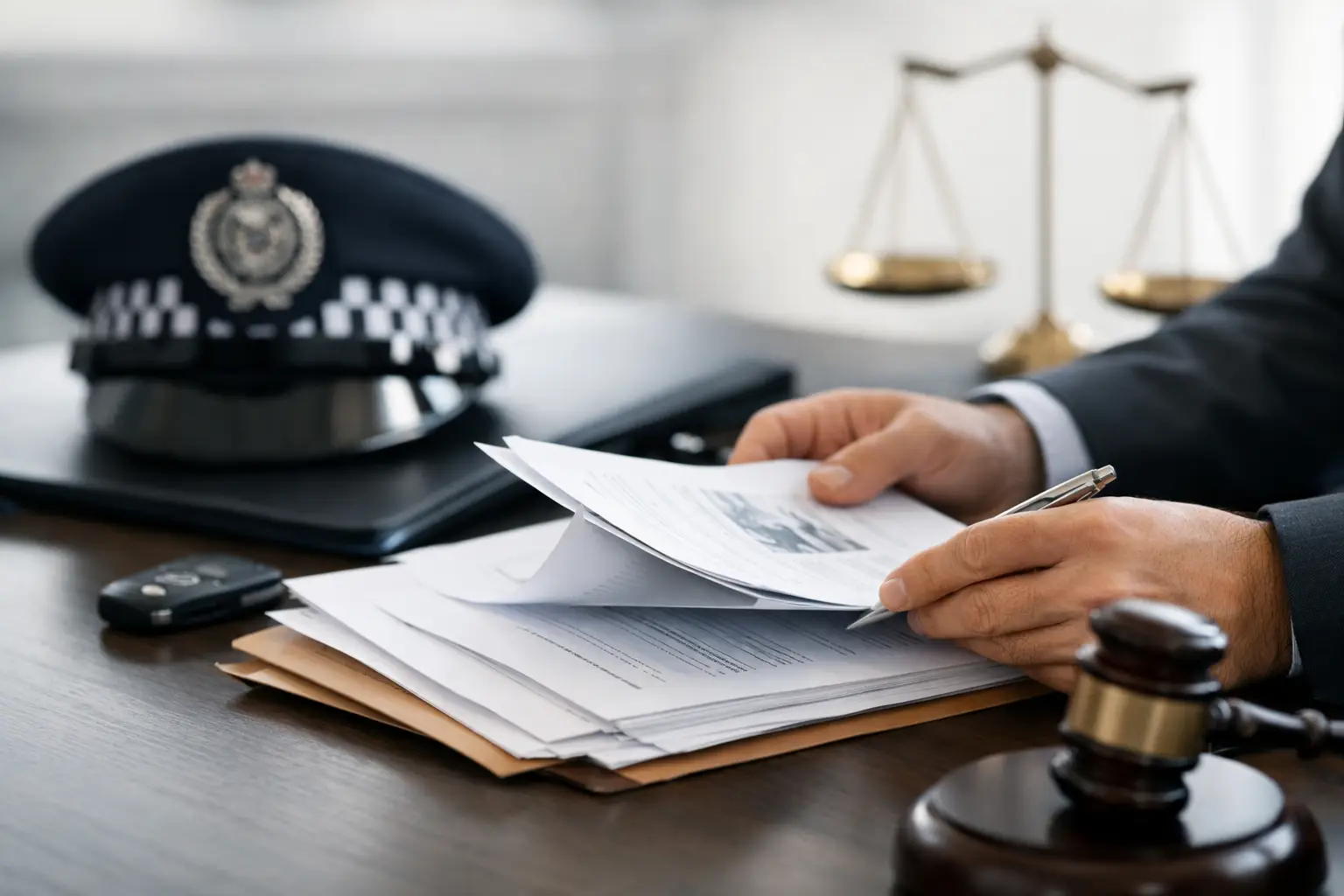
A police facts sheet can shape the entire course of your matter. It may be read by a magistrate when deciding penalty, bail, an AVO, a licence appeal or whether to accept a plea. If you need to know how to request police facts, act early. Do not wait until you are standing outside the courtroom, being asked whether you intend to plead guilty.
In NSW, the document is commonly called a police facts sheet, statement of facts or facts sheet. It sets out the version of events police allege occurred. It is not the same thing as proof, and it is not always accurate. The wording can affect your record, your reputation, your licence and, in serious cases, your liberty.
What are police facts?
Police facts are a written summary prepared by police to support a charge or application. They usually identify the alleged offence, where and when it happened, the conduct police say occurred, and the evidence they rely on at a high level.
For a drink driving allegation, the facts may refer to the time and location of the stop, the breath analysis result, your driving behaviour and anything you allegedly said. In an assault matter, they may describe the alleged victim, injuries, witnesses, CCTV, prior interactions and the circumstances of the incident. In an AVO proceeding, they can outline the protected person’s allegations and the reasons police say an order is necessary.
The document may appear straightforward, but a short phrase can carry serious consequences. Descriptions such as “unprovoked”, “ongoing”, “aggressive”, “high-range”, “commercial quantity” or “significant risk” can influence how a court views the matter. If you agree to facts that are wrong or overstated, it can be difficult to undo that damage later.
How to request police facts in NSW
The right way to request police facts depends on where your matter is up to and whether you intend to plead guilty or not guilty.
If you have received a Court Attendance Notice, check the documents attached to it first. Police facts are sometimes provided with the notice, particularly in less complex Local Court matters. If they are not included, your solicitor can contact the relevant police prosecutor and request a copy before the first court date.
You can make the request yourself, but it is often better for a criminal lawyer to do it. A lawyer can identify whether the document provided is complete, whether the allegations contain issues that need correction, and whether further material should be sought before you make any decision about a plea.
At court, the police prosecutor may provide the facts sheet to you or your lawyer. In some matters, particularly where a guilty plea is proposed, the court will want the facts available before sentencing can proceed. If the facts have not been served, the matter may need to be stood down or adjourned.
If you are pleading not guilty, the issue is broader than simply obtaining police facts. You will generally need the prosecution brief, which may include witness statements, body-worn video, CCTV, photographs, certificates, interview records, forensic material and other evidence police intend to rely on. The police facts sheet is only a summary. It is not a substitute for disclosure of the evidence.
What to say when asking for the facts
Keep any request short, professional and focused on the case. Include your full name, date of birth, court date, charge and the court where the matter is listed. Ask for a copy of the police facts sheet and, if you are defending the charge, ask what prosecution material is available or when the brief will be served.
Do not use the request as an opportunity to explain your side of the story, apologise, argue with police or make admissions. Written communications can be retained and may later be relevant. You are asking for material, not negotiating the case.
When should you request the facts?
Request them as soon as possible after receiving your Court Attendance Notice or learning that a matter is listed. This is particularly important if your first court date is close, you are on bail, your licence is at risk, or you are considering an early guilty plea.
An early guilty plea can sometimes be strategically appropriate, but only after you understand what you are admitting. A plea is not merely an acceptance of the charge name. It can involve accepting the prosecution version of events. If that version contains damaging details that are not agreed, your lawyer may need to negotiate amendments, prepare submissions about disputed facts or advise that the matter should not proceed to sentence that day.
Timing also matters because some evidence takes longer to obtain. CCTV can be overwritten. Witness recollections can fade. Where there is a genuine defence, an early legal review can help preserve material that supports your account.
What if the police facts are wrong?
Police facts are allegations, not a final finding by the court. You should read them carefully against what actually happened. Focus on details that affect the seriousness of the offence, your role, intent, risk, harm caused, prior relationship with another person, or whether a defence may be available.
Not every disagreement needs a fight. A spelling error or an unimportant time discrepancy may not change the outcome. But incorrect assertions about threats, violence, intoxication, admissions, driving manner, quantities, injuries or repeat conduct can be critical.
If you intend to plead guilty but dispute significant facts, do not simply tell the magistrate that the police version is “mostly right”. There are formal ways to deal with disputed facts. Depending on the issue, your lawyer may seek agreed amendments, provide a written version of events, or ask for a hearing to determine the disputed allegations. The correct approach depends on whether the difference could affect sentence or another court order.
If you plead not guilty, the prosecution must prove the charge beyond reasonable doubt. The police facts sheet does not prove anything by itself. The case will turn on admissible evidence and whether it establishes every element of the offence.
Police facts are not your complete brief of evidence
One of the most common mistakes is assuming that the facts sheet tells you the whole case. It does not. It is police’s narrative, usually prepared for court administration and sentencing purposes. Important context may sit in body-worn footage, radio communications, a witness statement, medical records, photographs or material police have not yet served.
The opposite risk also exists. Some people assume that because police have not mentioned a detail in the facts, it cannot be used later. That is not always correct. The evidence and the procedural stage of your matter need to be considered carefully.
This is why a quick review by an experienced criminal lawyer can be decisive. The question is not only whether the facts are fair. It is whether the charge is made out, what evidence is available, what police must prove, and what approach best protects your future.
Do not make a rushed plea without seeing the facts
The pressure on a first court date can be intense. You may want the matter finished, feel embarrassed, be worried about work, or believe that pleading guilty is the quickest way to move forward. In traffic and criminal matters, a rushed decision can create consequences that last far longer than the court appearance.
Before entering a plea, make sure you have seen and understood the allegations. Ask whether the facts will be handed up to the magistrate. If you do not agree with material parts of the document, obtain legal advice before accepting it. This is especially important where your licence, employment, visa status, professional registration, family arrangements or freedom may be affected.
At KRAYEM & CO Lawyers, the focus is on taking control of the detail early: obtaining the material, testing the prosecution case and putting forward the strongest possible position before a decision is made. The first step is simple, but it matters: get the facts, read them properly, and do not let an untested police version become your story in court.