

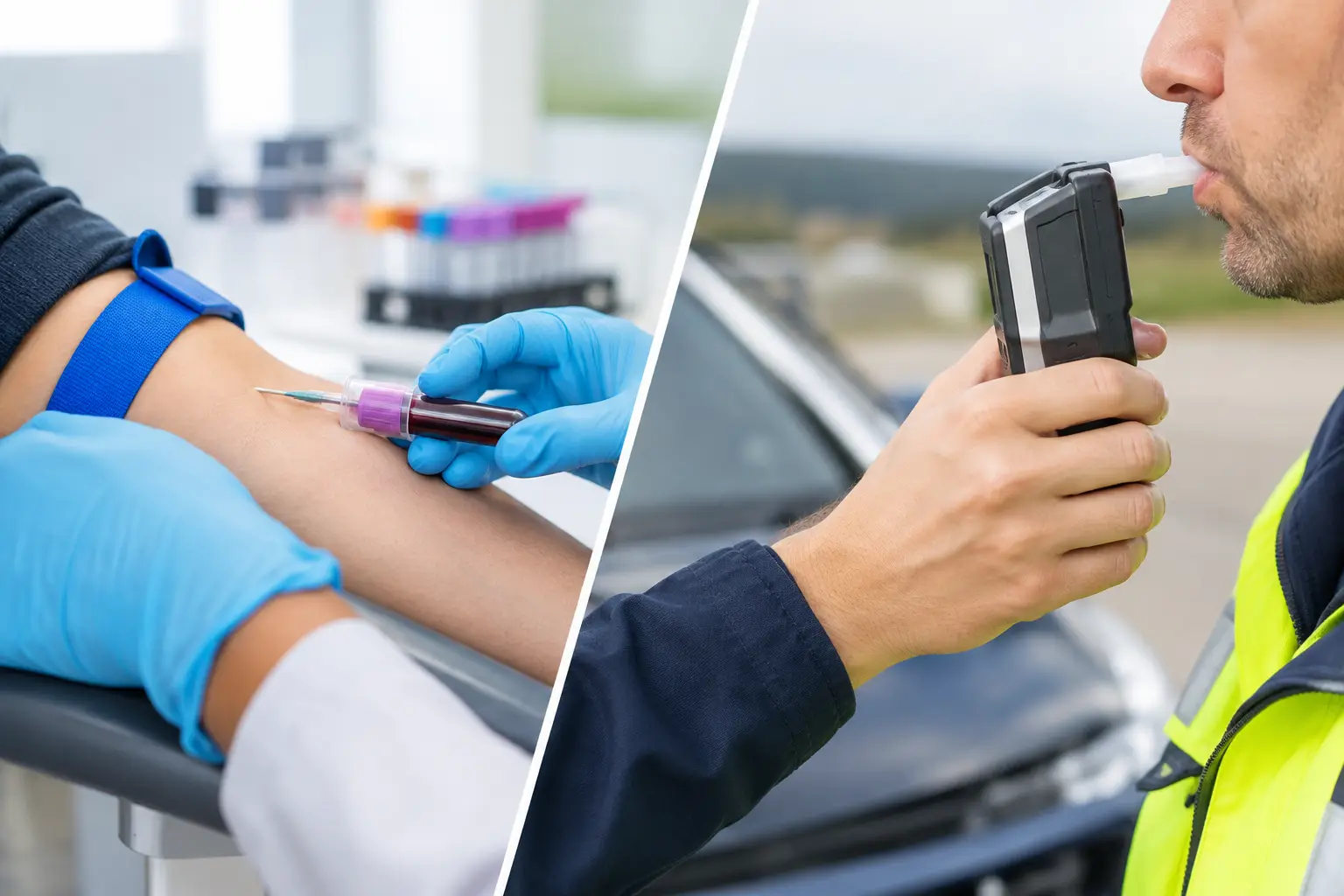
A roadside stop can move quickly: a police officer asks you to provide a breath sample, you are taken for further testing, or you are treated at hospital after a crash. The difference between a blood test versus breathalyser is not just medical. In NSW drink driving matters, the testing method, timing and procedure can affect the evidence police rely on and the defence options available to you.
If your licence, job or reputation is on the line, do not assume a result tells the entire legal story. The result matters, but so does how it was obtained.
Blood test versus breathalyser: the key difference
A breathalyser is commonly used to describe any alcohol-testing device. Legally and practically, however, there is an important difference between a preliminary roadside breath test and a breath analysis conducted at a police station or mobile testing unit.
The roadside test is generally a screening process. If it indicates the presence of alcohol, or if police have another lawful basis to require further testing, you may be directed to provide a breath analysis. It is usually the breath analysis result, rather than the initial roadside reading, that forms the evidentiary basis for a drink driving charge.
A blood test measures alcohol in a blood sample. It may become relevant where a driver is taken to hospital after a collision, is physically unable to provide a breath sample, or is subject to a statutory testing process following a serious incident. Blood testing can also arise in matters involving suspected drug driving, although alcohol and drug-testing procedures are not identical.
Neither method is automatically “better” for the person charged. Each has its own legal framework, procedural requirements and potential issues for a court to consider.
When can police require a breath test or blood sample?
Police in NSW have broad powers to test drivers for alcohol. A driver can be required to undertake a roadside breath test even where they have not been involved in an accident and are not showing obvious signs of intoxication. Random breath testing is a normal part of road policing.
If further testing is required, police may take you to a police station, a mobile breath-testing facility or another approved location for breath analysis. Failing or refusing to provide a sample without a lawful excuse can itself be a serious offence. The consequences can be comparable to, and sometimes more severe than, a drink driving allegation.
Blood testing is more likely in a hospital setting, particularly after a crash. Medical staff may take a sample as part of treatment, and police may seek access to or analysis of a sample under the relevant legislation. In some circumstances, a blood sample may be required when breath analysis is not reasonably practical because of injury or a genuine medical condition.
This is why it is critical to be precise about what happened. Being unable to provide a breath sample because of a documented respiratory injury is very different from simply deciding not to co-operate. If you have a genuine medical issue, tell police clearly and ensure it is recorded. Do not assume the issue will be obvious later.
Why the testing method can matter in court
Drink driving prosecutions are often presented as straightforward because there is a numerical result. Yet the number is only one part of the prosecution case. The court may also need to consider whether the proper legal procedure was followed and whether the evidence can be admitted and relied upon.
With breath analysis, the issues may include the lawfulness of the requirement, whether required instructions were given, whether the approved process was followed, the timing of tests, the identity of the person tested and the documentation produced by police. A lawyer may also examine whether there was any relevant medical condition or equipment issue.
With blood testing, attention may turn to how the sample was collected, stored, identified and analysed. The time between driving and collection can be significant. Alcohol levels can rise or fall over time, depending on when the person last drank, ate and stopped consuming alcohol. Any argument based on timing or alcohol absorption requires careful evidence, not guesswork.
A blood result is not automatically more reliable simply because it comes from a laboratory. Equally, a breath analysis result should not be dismissed because it came from a machine. Courts deal with both forms of evidence under specific statutory rules. The real question is whether the prosecution can prove the offence beyond reasonable doubt using admissible, reliable evidence obtained in accordance with the law.
The result is not the only issue in a drink driving case
Even where the alcohol reading is not realistically disputed, there may still be important work to do. The charge level, your licence class, whether you were driving for work, your traffic history, the circumstances of the stop and any crash or aggravating features can all affect what happens next.
For many NSW drivers, the immediate concern is their licence. Depending on the allegation, police may issue an immediate suspension notice. You may have a limited window to challenge that suspension in court. Waiting until the court date on the drink driving charge can mean missing an earlier and separate opportunity to protect your ability to drive.
If the matter proceeds to sentencing, a strong case is built around more than an apology. The court may consider your character, driving history, employment impact, family responsibilities, insight, rehabilitation and the practical steps you have taken since the incident. A traffic offender intervention program, counselling or evidence addressing alcohol use may assist in suitable cases, but it must be genuine and relevant to your circumstances.
A court will also look closely at public safety. A carefully prepared plea should take responsibility without making unnecessary admissions that worsen your position or create problems in related proceedings, such as an insurance claim or a civil dispute arising from an accident.
What to do after a breath or blood alcohol allegation
The period after testing is where many people make avoidable mistakes. Stay calm, comply with lawful directions and do not argue your case at the roadside or hospital. Trying to explain how much you drank, when you stopped drinking or why you felt capable of driving can later become part of the evidence.
Keep every document you receive, including court attendance notices, suspension notices, bail paperwork and any paperwork about the test. Write down a private timeline while the details are fresh: where you were stopped, the time of driving, the time of testing, what officers said, whether there was a crash, what you had consumed, and any medical treatment or medication. Do not alter records or contact witnesses to coordinate accounts.
Obtain legal advice promptly, especially if you have received an immediate suspension, have a high-range allegation, were involved in an accident, hold a professional licence, or need your licence to work or care for family. The earlier a lawyer can review the documents and identify deadlines, the more options may be available.
A strategic response starts with the evidence
There is no universal answer to whether a blood test or breathalyser result is easier to challenge. It depends on the facts, the applicable procedure, the available records and the broader circumstances of the allegation. Some matters require a close challenge to the prosecution evidence. Others call for early preparation of a compelling plea aimed at protecting your licence, livelihood and future.
At KRAYEM & CO Lawyers, the focus is on taking control of the situation early, assessing the evidence properly and fighting for the best available outcome. If you are facing a drink driving allegation, act before deadlines narrow your options and before a temporary traffic problem becomes a lasting consequence.