

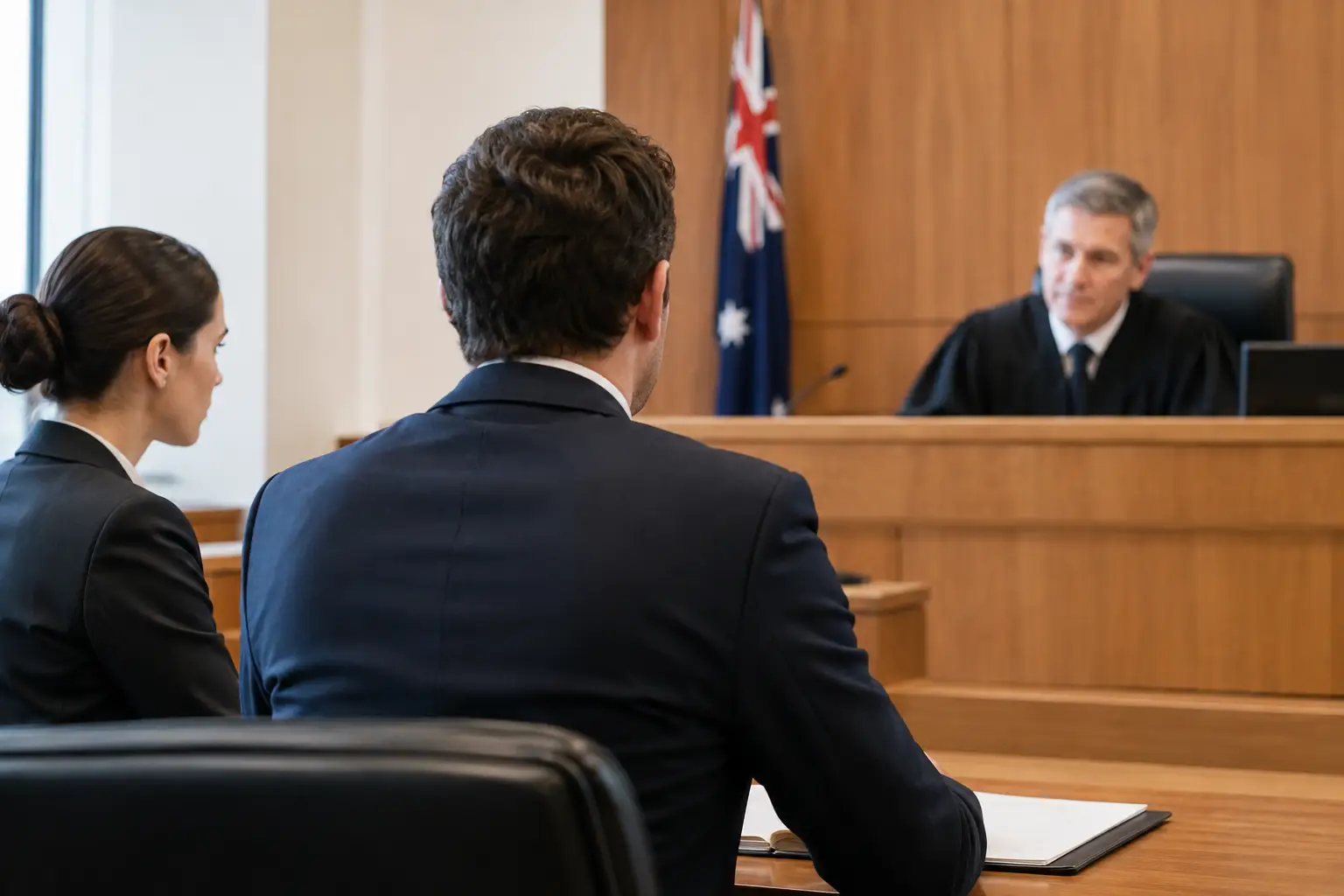
A defended hearing is the point where your matter stops being an allegation on paper and becomes a case the prosecution must prove in court. If you are asking what happens at a defended hearing, the short answer is that witnesses give evidence, lawyers test that evidence, and a magistrate decides whether the charge has been proved. For someone facing a criminal or traffic charge, the outcome can affect your licence, job, reputation and freedom.
In most NSW Local Court matters, a defended hearing follows a plea of not guilty. It is not a sentencing hearing, and it is not a chance for the prosecution to simply repeat the police version of events. The prosecution carries the burden of proving each element of a criminal charge beyond reasonable doubt.
What happens at a defended hearing in NSW?
Most defended hearings in the Local Court involve summary criminal and traffic offences, such as drink driving, common assault, drug possession, apprehended violence order matters, driving while suspended, or public nuisance allegations. The hearing is usually before a magistrate, not a jury.
The prosecutor presents the prosecution case first. This may include police officers, civilian witnesses, body-worn video, CCTV, photographs, medical records, certificates, call recordings or forensic material. Each item of evidence must be properly put before the court. A police fact sheet is not automatically proof simply because it has been written by police.
Your lawyer can object to inadmissible evidence, challenge unreliable material and cross-examine witnesses. Cross-examination is often where the real issues emerge: whether a witness had a clear view, whether their memory is accurate, whether their account has changed, whether police acted lawfully, or whether the evidence proves what the prosecution says it proves.
At the end of the prosecution case, the defence may argue there is no case to answer. This applies where the evidence, even taken at its highest, could not prove an essential part of the offence. If the magistrate accepts that submission, the charge is dismissed without the defence needing to call evidence.
If there is a case to answer, the defence decides what evidence, if any, to call.
Before the hearing: building the defence case
A defended hearing should not be approached as a gamble on the day. The work done beforehand can shape the entire result.
After a not guilty plea, the prosecution will generally provide a brief of evidence. This can include witness statements, police notebook entries, video footage, photographs, certificates and other documents they intend to rely on. A defence lawyer examines that material closely, not just for what it says, but for what is missing, inconsistent or incapable of proving the charge.
The best strategy depends on the allegation. In a drink driving matter, the issue may concern the reliability or admissibility of testing evidence. In an assault matter, it may be identification, self-defence, whether the force used was lawful, or whether the prosecution can prove intent. In a driving matter, the central question may be who was driving, whether you were properly notified of a suspension, or whether police can prove the relevant time and location.
Your lawyer may obtain further material, seek disclosure from the prosecution, issue a subpoena, inspect CCTV, speak with defence witnesses or prepare you for giving evidence. Not every case needs every step. Calling a witness who adds little, or giving evidence without careful preparation, can create unnecessary risk.
What to expect on the day
Arrive early, dressed neatly and prepared to wait. Local Court lists can be busy, and your matter may not start at the exact listed time. Your lawyer will usually speak with the prosecutor before the hearing begins to confirm the issues, discuss outstanding evidence and see whether any agreement can be reached.
When the matter is called, the magistrate will confirm the charge and your not guilty plea. The prosecutor will outline the case and call the first witness. In many police prosecutions, this is the investigating officer or arresting officer.
The witness gives evidence under oath or affirmation. The prosecutor asks questions first. Your lawyer then cross-examines them. This is not about arguing with a witness or trying to score points. Focused cross-examination tests whether the witness is accurate, credible and reliable, and whether their evidence actually proves the legal elements of the charge.
The prosecution may call several witnesses. Once cross-examination is complete, the prosecutor can ask limited follow-up questions to clarify matters raised in cross-examination. The magistrate may also ask questions where clarification is needed.
You may be asked to wait outside the courtroom while other witnesses give evidence. This prevents witnesses from tailoring their evidence to what they have heard. Your lawyer will explain when you need to be present and when you may need to give evidence.
Do you have to give evidence?
No. In a criminal matter, you have the right to remain silent and the prosecution cannot make you prove your innocence. The decision to give evidence is strategic.
Sometimes the prosecution evidence is weak enough that the defence should not fill gaps in its case. In other matters, your evidence may be essential to raise self-defence, explain an innocent circumstance, challenge identification or give the court a credible alternative account.
If you give evidence, you will be sworn in or affirm to tell the truth. Your lawyer will ask questions first, then the prosecutor can cross-examine you. That can be confronting, particularly when the allegation is personal or serious. Thorough preparation matters. You should answer truthfully, listen to the question, avoid guessing and say when you do not remember.
A defendant who gives evidence is not expected to be perfect. What matters is whether your account is credible when tested against the whole of the evidence.
Submissions, the verdict and what follows
After all evidence is complete, both sides make final submissions. The prosecutor explains why they say the charge is proved. Your lawyer identifies the weaknesses, contradictions and legal deficiencies in the prosecution case, then explains why the magistrate should find reasonable doubt.
The magistrate may give a decision immediately, or reserve the decision for another date where the facts or legal issues are more complex. If you are found not guilty, the charge is dismissed and you leave without a conviction for that offence. In some cases, an application for legal costs may be considered, but costs are not automatic.
If you are found guilty, the matter moves to sentence. Depending on the circumstances, sentencing may occur that day or be adjourned so further material can be obtained. Character references, an apology letter, treatment evidence, driving records and evidence of rehabilitation can become highly relevant at that stage. It is wise to discuss sentencing preparation before the hearing, even where you have a strong defence.
Defended hearings are different in AVO and appeal matters
The phrase “defended hearing” is also used in apprehended violence order proceedings. The process looks similar because witnesses give evidence and are cross-examined, but the legal test differs. In an AVO application, the court generally decides the matter on the balance of probabilities and considers whether there are reasonable grounds to fear future violence, intimidation or harassment.
Licence appeals and other administrative proceedings can also have different rules, evidence requirements and burdens. The label is the same, but the strategy should be tailored to the type of case and the orders you are trying to avoid.
How to prepare without damaging your case
Do not contact prosecution witnesses, complainants or protected persons to discuss the evidence. This can create new allegations, breach bail or AVO conditions, and seriously undermine your position. Keep all documents, messages, photos and recordings that may assist your defence, and provide them to your lawyer without editing or deleting anything.
Be direct with your legal team about the facts, including information you think is unhelpful. A lawyer can only protect your position properly if they know the risks early. Surprises in court rarely help the defence.
A defended hearing is not a formality and it is not the time to hope the evidence will simply fall apart. Early, clear advice gives you time to test the prosecution case, prepare your evidence and make decisions with your future in mind.