

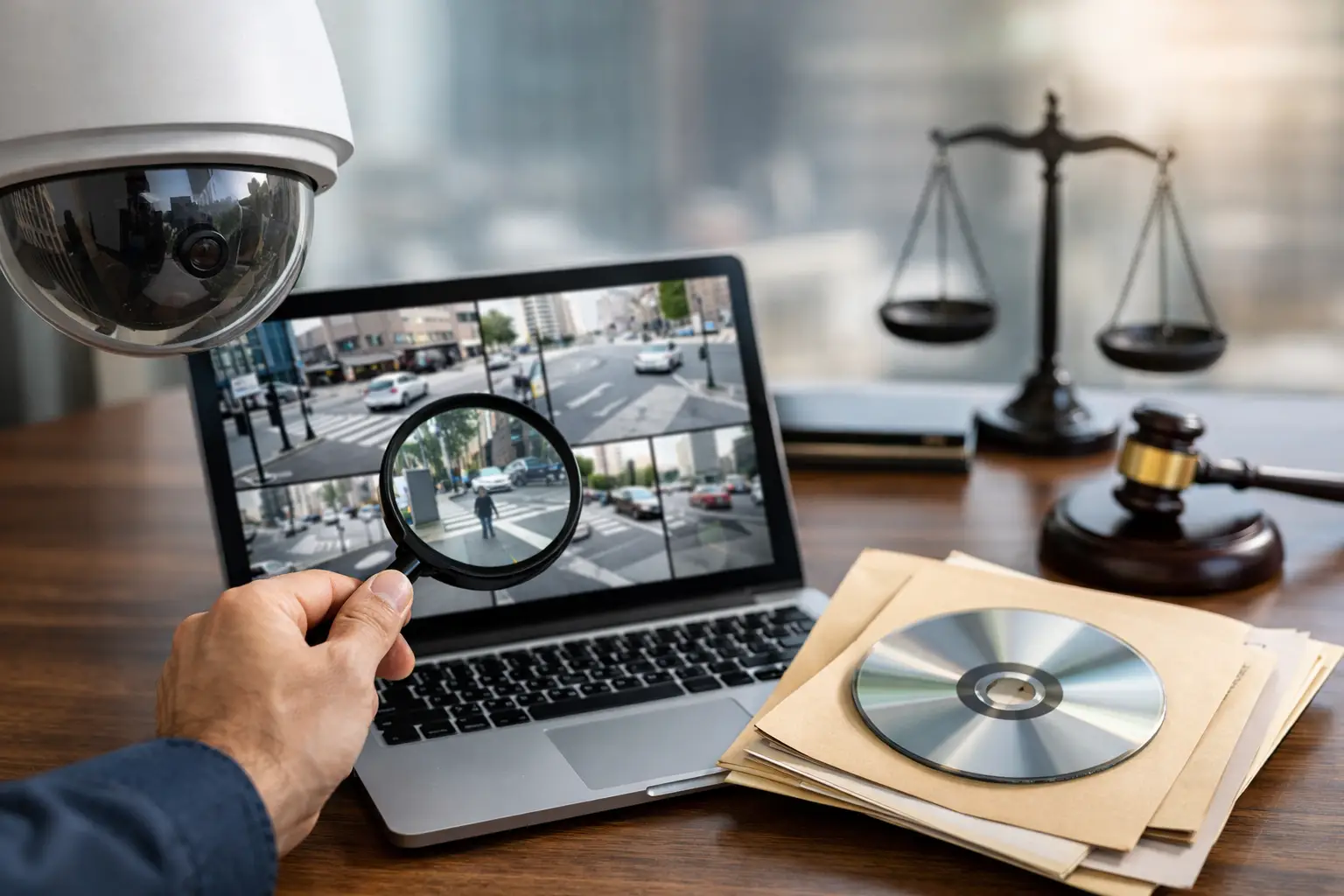
CCTV can disappear before you have had the chance to explain your side of the story. For anyone asking how to obtain CCTV evidence after an arrest, traffic incident, assault allegation or AVO dispute, speed matters. Many systems overwrite footage within days or weeks. The right footage may show what happened before police arrived, who was present, the condition of a road, or whether an allegation is accurate.
The first priority is not proving your whole case in one conversation with a shop, venue or building manager. It is preserving the footage so it still exists when your lawyer, police or the court needs it.
How to obtain CCTV evidence before it is deleted
Start by writing down the exact details while they are fresh: the date, approximate time, location, direction of travel, entrances or exits used, vehicles involved, and names of nearby businesses or buildings. A difference of even 10 minutes can make a request harder to action, particularly where a system records several cameras at once.
Walk through the area if it is safe and appropriate. Look beyond the obvious camera. A petrol station, pub, apartment foyer, loading dock, council facility, neighbouring home, train station or business across the road may have captured a different angle. In traffic matters, footage from a nearby business can sometimes be more useful than a dashcam because it records the approach, intersection or road conditions.
Contact the owner or manager promptly and make a clear preservation request. Explain that an incident occurred, identify the date and time range, and ask them not to overwrite, edit or delete the relevant footage. Keep the request factual. Do not argue the case, make threats or pressure staff to give you material they are not authorised to release.
A short written request is often sensible because it creates a record. Include your name, contact details, the precise location and the time window you need. If the business agrees to provide a copy, ask for the original file format where possible, rather than a mobile recording of a monitor. Original footage is generally easier to assess for timing, continuity and authenticity.
A preservation request is not the same as a right to receive footage
Private businesses and strata managers are not automatically required to hand CCTV to every person who asks. They may have privacy concerns, internal policies or instructions from police. Some will only release footage to police, an insurer, a solicitor or under a subpoena.
Do not assume a refusal means the footage is gone or that it cannot be obtained later. It may simply mean the owner needs a formal request. What matters is that the footage is identified and preserved before the system records over it.
If police are investigating, tell the officer in charge about the cameras immediately and provide exact locations and times. Ask that the footage be obtained and retained. Follow up in writing if possible. Police may collect material they consider relevant, but they do not always know every camera exists or appreciate why a particular angle assists your defence.
When police hold the footage
If police have taken CCTV, it may form part of the prosecution brief. In criminal and traffic proceedings in NSW, the prosecution has disclosure obligations. Your lawyer can review the material provided, identify gaps and raise concerns where relevant footage appears to be missing.
That does not mean every recording from every camera will automatically be handed over. Relevance, privacy, the scope of the charge and whether police ever obtained the footage can all affect what is available. Sometimes police have only saved a short clip. The missing minutes before or after that clip may be where the real context sits.
This is why early legal advice can be decisive. A lawyer can ask targeted questions: Which camera recorded the event? Was there audio? What was the full recording period? Was footage downloaded directly from the system? Is there an incident report, camera map or officer note showing what was viewed but not retained?
In a serious matter, your defence may depend on more than the final video file. The chain of custody, the recording system’s clock accuracy, image quality and any editing can all matter. A clip that appears clear at first glance may not establish who is shown, what was said, or what occurred outside the frame.
If a business refuses to provide CCTV
Do not take matters into your own hands. Do not enter restricted areas, attempt to access a camera system, impersonate an authorised person or publish accusations about the owner online. Those actions can create fresh legal problems and damage your credibility.
Where footage is important and the owner will not provide it voluntarily, a solicitor may consider whether a subpoena is appropriate once court proceedings are underway. A subpoena is a formal court process requiring a person or organisation to produce documents or footage, subject to legal objections and the court’s rules.
A subpoena is not a fishing expedition. It needs to be properly drafted, identify the material sought with sufficient precision and have a genuine forensic purpose. Courts will not support broad requests made only because footage might possibly help. There can also be filing, service and conduct money costs, so the value of the footage must be weighed against the likely benefit.
For urgent situations, a lawyer may contact the owner before taking formal steps and explain the need to preserve material. This can be particularly valuable where a venue has a short retention period or where the footage may be overwritten overnight.
Protect the value of the footage you receive
Getting CCTV is only half the job. The way it is handled can affect its usefulness in negotiations or court.
Keep the original file untouched. Save copies in more than one secure place and record who gave it to you, when it was received and how it was transferred. Keep any email, receipt or message accompanying the footage. If a business gives you a USB, do not alter the files, trim the video, add captions or convert it unless your lawyer advises you to do so.
Avoid sharing the footage with friends, family group chats or social media. A video may involve other people, alleged victims, witnesses or children. Publishing it can raise privacy concerns, interfere with an investigation or make an already difficult matter worse.
Take separate notes about what you believe the footage shows, including timestamps. Keep those notes clearly separate from the original material. Your lawyer can assess whether the recording supports your account, creates a risk that needs to be addressed, or requires expert review.
Footage can help, hurt or do neither
CCTV is not automatically favourable simply because it exists. A fixed camera can distort distance and speed. Poor lighting may conceal important detail. There may be no sound, no view of the lead-up, or a timestamp that is wrong. In an assault matter, a short clip may show physical contact without the words, threats or conduct that preceded it. In a driving matter, it may show a vehicle but not establish who was driving.
That is why strategic assessment matters. The question is not merely whether you can obtain the recording. It is whether the complete recording, viewed in context, advances your defence or changes the way the case should be approached.
Act early if your licence, freedom or reputation is at stake
If you have been charged, received a court attendance notice, been served with an AVO, or are facing a licence suspension, do not wait for the first court date to think about CCTV. Retention periods can be short, and evidence lost through delay may be impossible to recover.
Bring every detail you have to your first legal consultation: screenshots of camera locations, emails to businesses, names of staff spoken to, dashcam files, photos of the scene and your timeline. A criminal or traffic defence lawyer can identify what should be preserved, what police should be asked to obtain and whether court action may be required.
The strongest cases are often built in the early days, when the facts can still be tested and the evidence has not vanished. If CCTV may show the truth of what happened, treat it with urgency and get clear advice before a valuable piece of evidence is lost.